EB-01
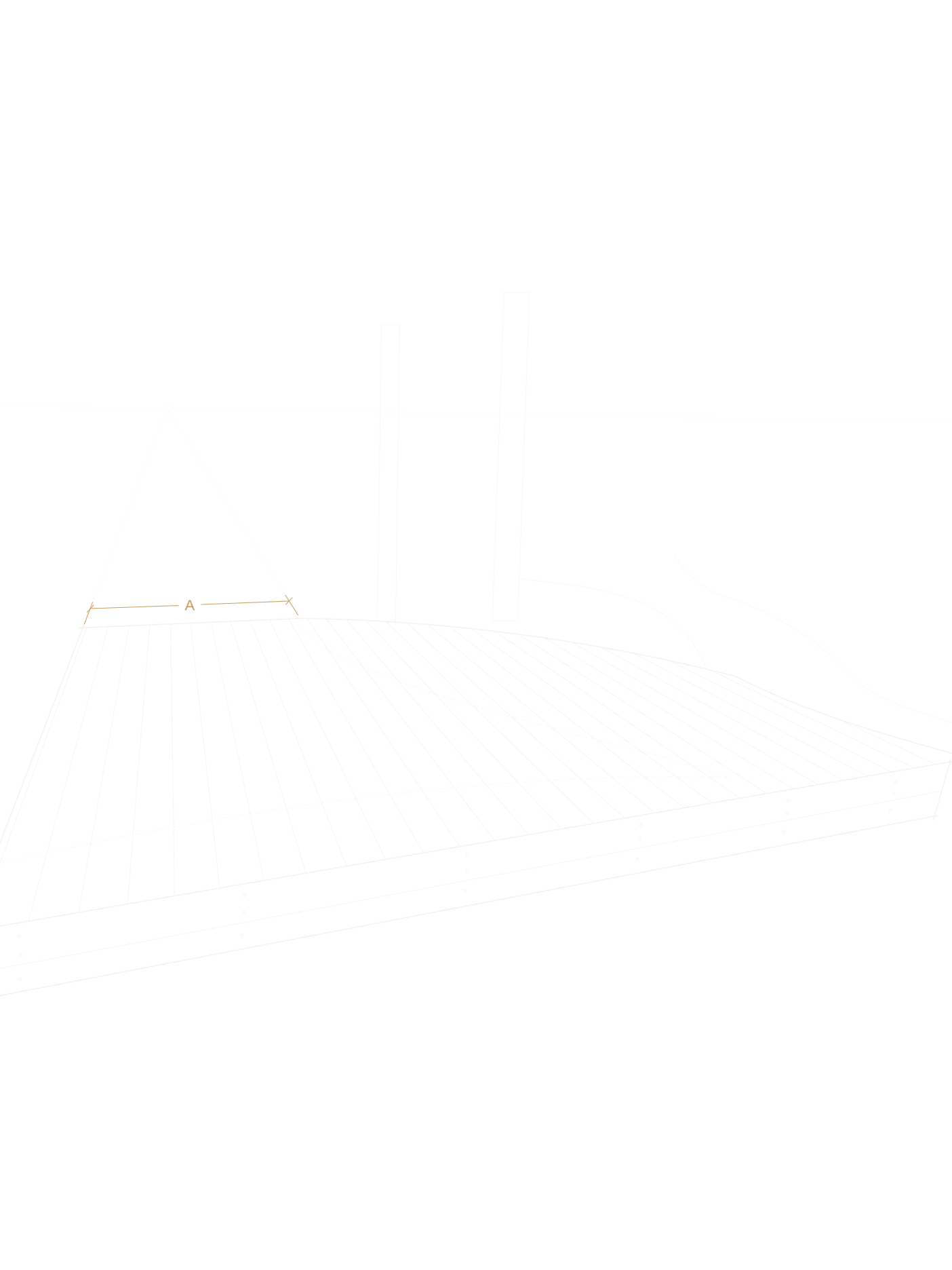
Curved deck for a play space
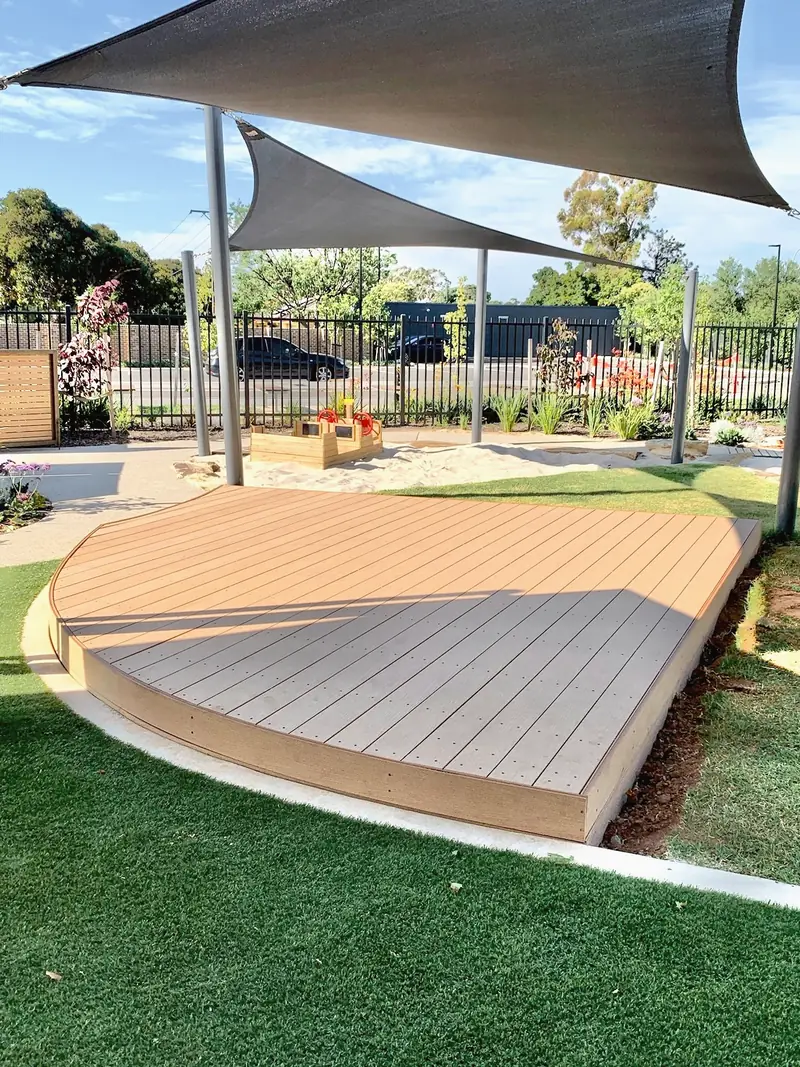
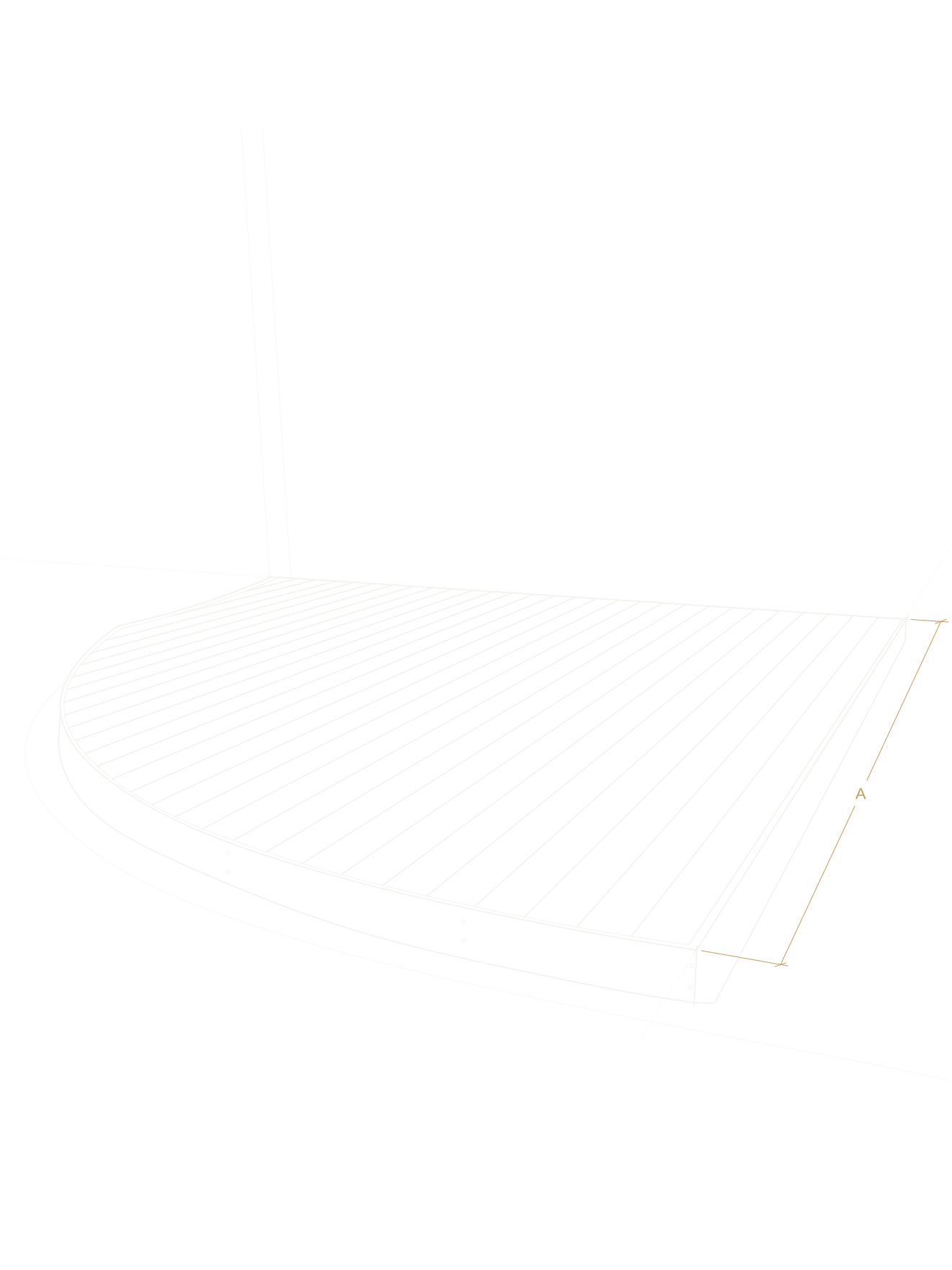
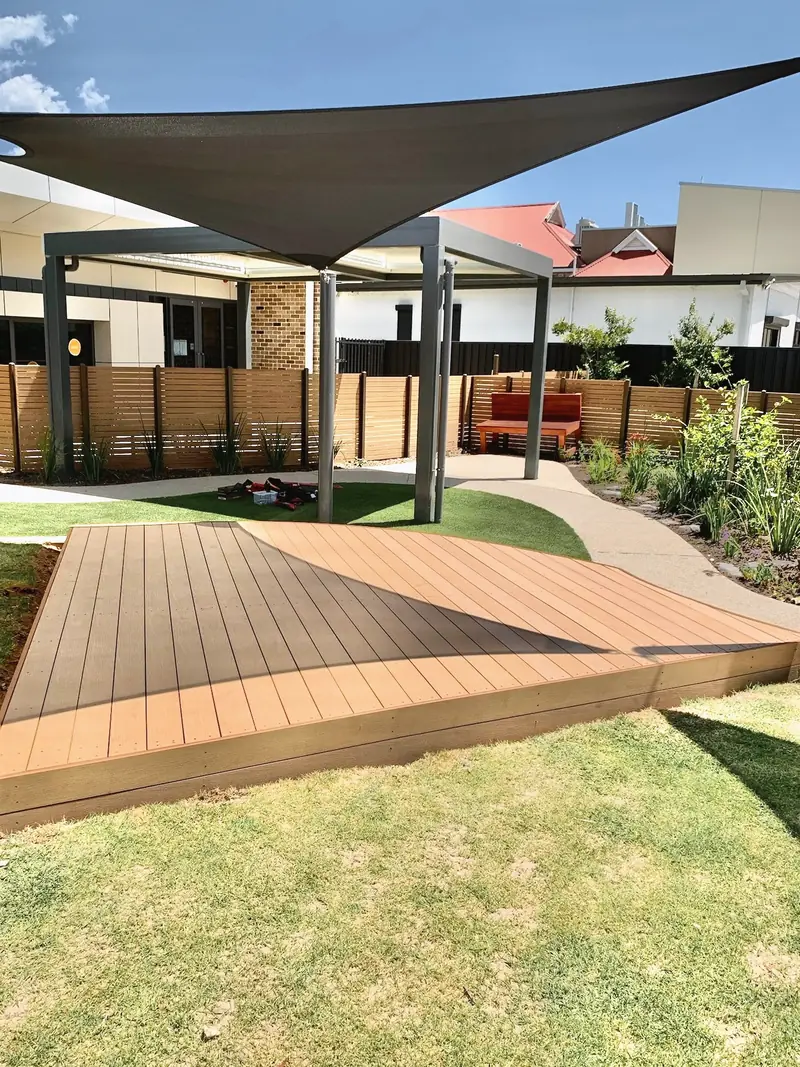
Built on a lawn under shade sails in an outdoor play space, with one long edge that curves the whole way round.
Open the jobSome yards need a narrow walkway down the side of the house. Others have room for a deck with a curve in it, or a tree in the middle. Whichever yours is, Reinhard quotes it and builds it.
EB-01
Built on a lawn under shade sails in an outdoor play space, with one long edge that curves the whole way round.
Open the jobEB-03
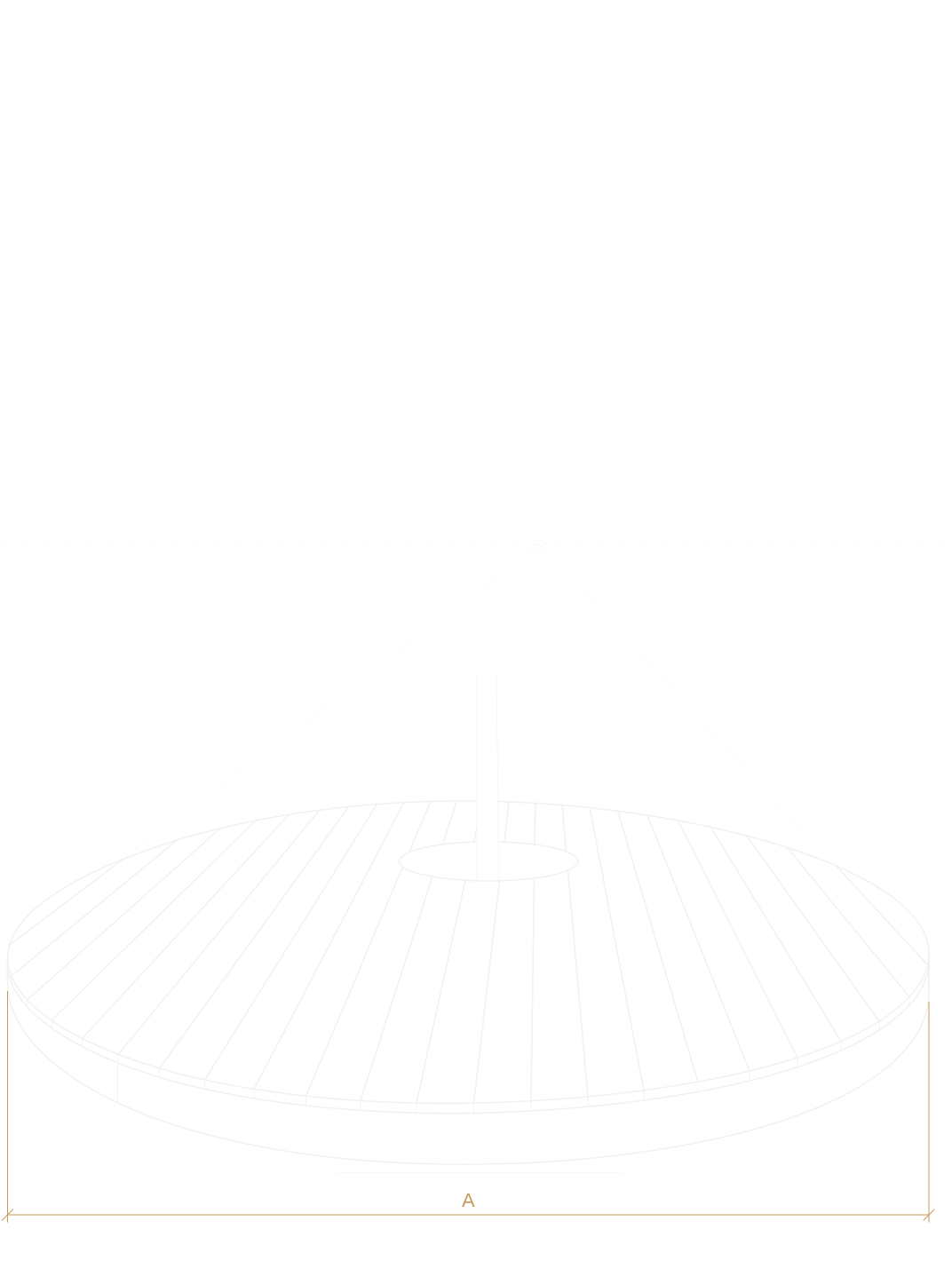
Built low to the ground, with a clean curved edge and an opening left in the middle for the trunk.
Open the job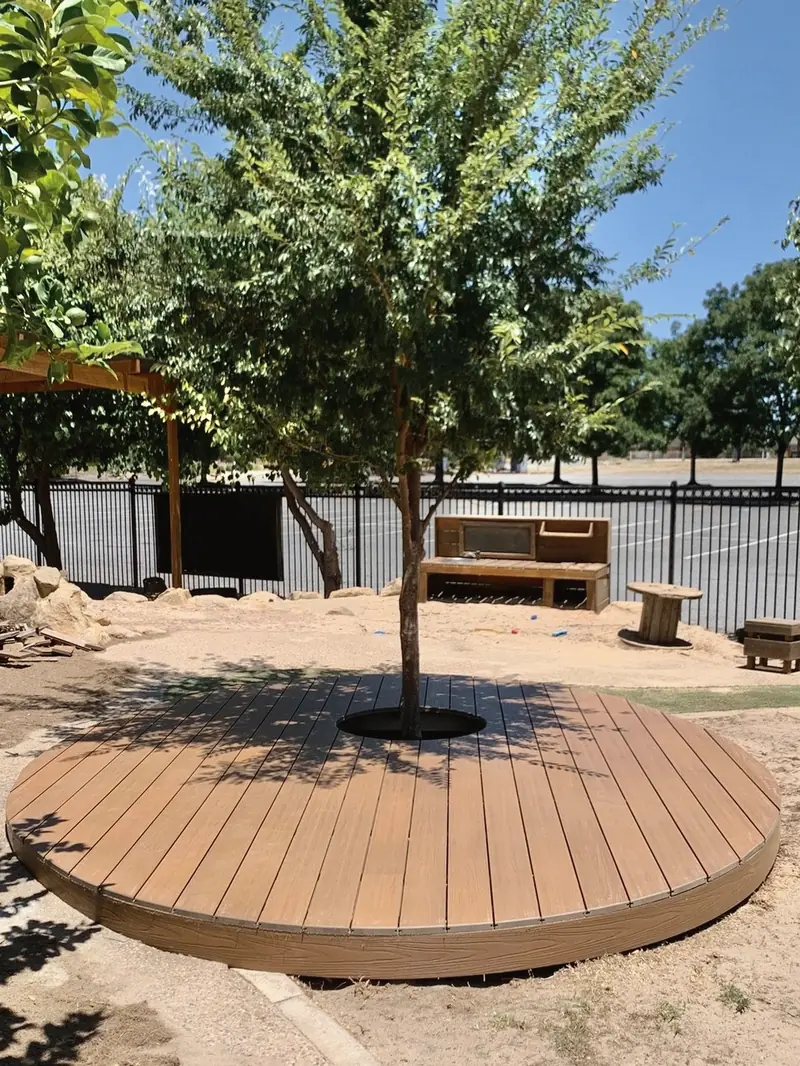
Got a spot that isn't square?
Quote a deckFootings and posts carry the bearers. Joists run across the bearers, and the boards are fixed to the joists. The steps sit on stringers. Once the boards are down you never see any of it again, so it's the part worth getting right.
Two decks the same size can be priced quite differently. These are the usual reasons.
Quote a deckMore deck means more boards, more frame and more footings.
Curved and round edges take more cutting and fitting than straight ones.
A higher deck needs longer posts and more bracing.
Timber species and composite ranges vary widely in price.
The frame under the boards, and footings to suit the ground.
How level the ground is, and how easily materials and tools can be carried in.
Each flight adds stringers, treads and time.
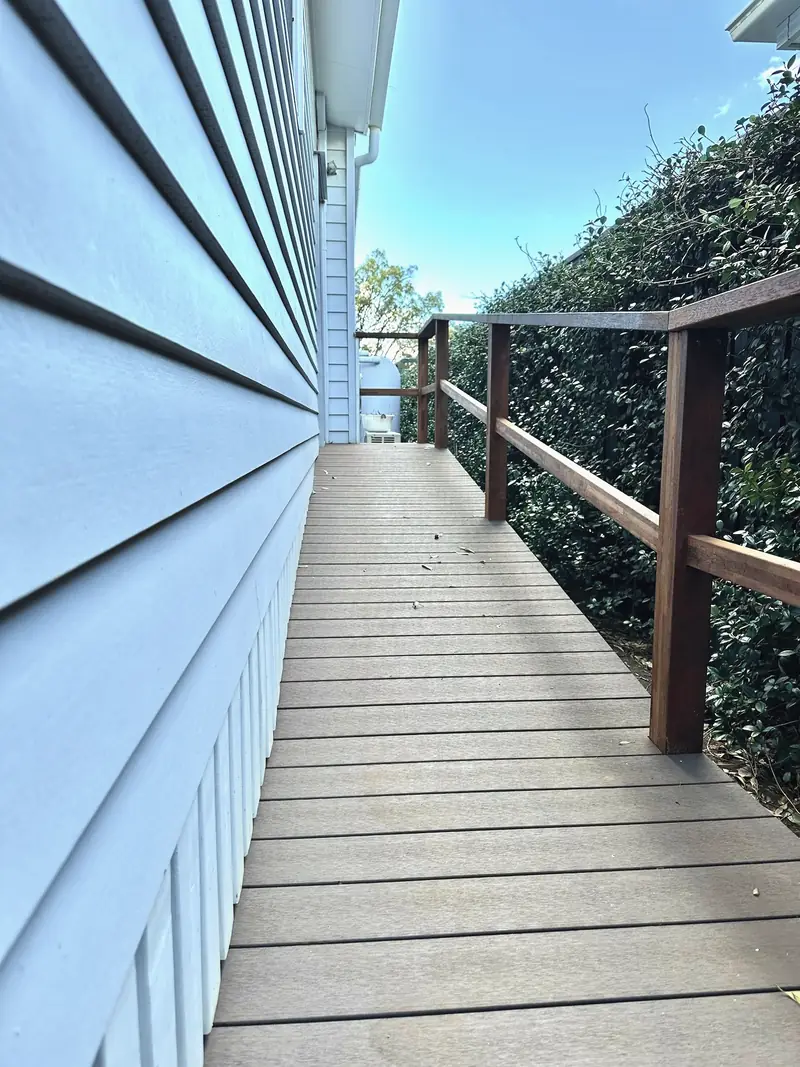
A rail along an open edge, like the one on the side boardwalk, and balustrades where the height calls for them.
Edge boards, how the boards are fixed, and any oil or coating.
If the deck needs building approval, allow for a certifier's fees. The council question further down explains when it does.
Both make a good deck. Which suits yours comes down to the look you're after, how much sun the spot gets and how much upkeep you're happy to do.
| Timber boards | Composite boards | |
|---|---|---|
| Look | Natural grain, with colour that varies from board to board. Left unoiled, it weathers to silver-grey. | An even colour and texture across the deck. Most ranges are made to look like timber. |
| Upkeep | A regular clean and re-oil keeps the colour and protects the surface. Decks in full sun need it more often. | No oiling or staining. An occasional wash clears dirt, leaves and mould. |
| In full sun | Warms up in the sun like any deck. Lighter colours stay cooler. | Can get hot underfoot in full sun, especially in darker colours. |
| Movement | Swells and shrinks with moisture. Boards can crack or cup if they aren't kept sealed. | Expands and contracts with temperature, so gaps and fixings must follow the maker's instructions. |
| Cost | Varies widely by species and grade. Allow for oiling and upkeep over the years. | Boards often cost more up front, with less spent on upkeep later. |
| Lifespan | Depends on the species, how well the deck drains and breathes, and how well it's kept up. | Depends on the board range, and on laying it to the maker's instructions. |
Whichever you pick, the frame has to suit it. Each kind of board has its own rules for joist spacing, gaps and fixings, so it's worth deciding early.
Ask Reinhard about boardsSomething else? Ring or text 0424 533 727.
It depends on the deck. Brisbane City Council says a deck doesn't need building approval only if all of these apply:
If any one of those doesn't apply, the deck needs building approval, which is arranged through a building certifier. Planning approval can also be needed, for example if the property is in an overlay such as the Traditional building character overlay, or in a neighbourhood plan area and the deck doesn't meet the plan's requirements. With or without approval, the work still has to meet the relevant building codes and standards.
Council's decks and decking approvals page has the details, so check it for your property early on.
It depends on the look you want, how much sun the deck gets and how much upkeep suits you. Timber needs regular oiling to keep its colour; composite doesn't, but it can get hot underfoot in full sun. The comparison above covers the main differences, and Reinhard can go through the options for your spot.
Mainly its size and shape, any curves, how high it sits off the ground, the boards you choose, the frame and footings, access to the spot, and any steps or handrails. A final price usually depends on Reinhard seeing the space.
The suburb, roughly how big you'd like the deck, how high it will sit off the ground, and a few photos of the spot from different angles. A rough sketch with measurements helps too. You can add up to four photos to the quote form, or text them to Reinhard.
A photo of the spot and a rough size will do for a start.
Or reach him directly
That didn't send. Please call or text Reinhard on 0424 533 727, or email reinhard@engelbuild.com.au.
Request sent
He'll be in touch to talk it over. If it's urgent, call or text 0424 533 727.